
JESUS I TRUST IN YOU (Divine Mercy). "Always Trust in Jesus, He the beacon of light amongst the darkest clouds" ~ Zarya Parx 2016
"Where There is a Will, With God, There is a Way", "There is always a ray of sunshine amongst the darkest Clouds, the name of that ray is Jesus" ~ Zarya Parx 2014
"Raise not a hand to another unless it is to offer in peace and goodwill." ~ Zarya Parx 2012
2026 - Jubilee Year of St. Francis
Key Details of the Jubilee
- Occasion: The 800th anniversary (the Transitus) of St. Francis passing from earthly life in 1226.
- Duration: January 10, 2026, to January 10, 2027.
- Purpose: To encourage the faithful to reflect on humility, peace, and care for creation following the example of St. Francis.
- Indulgences: Plenary indulgences are available to Catholics under standard conditions (sacramental confession, communion, and prayers for the pope's intentions) by making a pilgrimage to a Franciscan church or place of worship dedicated to St. FrancisPrayer of St. FrancisLord, make me a channel of thy peace,
that where there is hatred, I may bring love;
that where there is wrong,
I may bring the spirit of forgiveness;
that where there is discord, I may bring harmony;
that where there is error, I may bring truth;
that where there is doubt, I may bring faith;
that where there is despair, I may bring hope;
that where there are shadows, I may bring light;
that where there is sadness, I may bring joy.
Lord, grant that I may seek rather to
comfort than to be comforted;
to understand, than to be understood;
to love, than to be loved.
For it is by self-forgetting that one finds.
It is by forgiving that one is forgiven.
It is by dying that one awakens to Eternal Life.
●▬▬ஜ۩۞۩ஜ▬♥▬●▬ஜ۩۞۩ஜ▬▬♥▬●▬▬ஜ۩۞۩ஜ▬▬●
Liturgical Cycle: A - Gospel of Matthew
20th Sunday in Ordinary Time
Daily Rosary
(MON, SAT) - Joyful Mysteries(TUES, FRI) - Sorrowful Mysteries
(WED,SUN) - Glorious Mysteries
(THURS) - Luminous Mysteries
Inspirational Hymns
Contents
Our Lady of Medjugorje Monthly Messages
"Dear children! While darkness and peacelessness rule in many hearts, you, little children, be prayer and my extended hands of love. Little children, place the Sacred Scripture in a visible place in your family and read it, so that it may be an encouragement for you to conversion and a new life; because Satan is strong and seduces hearts. Your hearts, through my maternal Heart, I desire to commend to the Heart of my Son Jesus, so that He, the Risen One, may reign in you and joy may begin to reign in you and around you. Thank you for having responded to my call." (With Ecclesiastical approval) 07/25/2026Thank you.. ~ Blessed Mother Mary
(Pope Leo XIV)
Dear brothers and sisters, happy Sunday!
Today’s Gospel speaks of Jesus approaching his disciples by walking on the waters of the Sea of Galilee in the midst of a storm (cf. Mt 14:22-33).
Following the miracle of the loaves and fish (cf. Mt 14:13-21), the Master urges his disciples to get into the boat and set out, while he withdraws to the mountain to pray by himself. Once away from the shore, the disciples find themselves at the mercy of the wind and struggle to make headway. After a successful experience in which they had been the protagonists of a miraculous sign, they now find themselves helpless and frightened in the face of the threat of the waves and the headwind.
As the night was drawing to a close, Jesus came towards them across the choppy waters, and, terrified, they mistook him for a ghost (v. 26). But he said to them, “Take heart, it is I; do not be afraid!” (v. 27). The Lord’s presence changes everything: Peter even manages to take a few steps across the waves towards him; but then losing his nerve, he begins to sink, and Jesus saves him. When the Master then steps into the boat, the storm subsides, and a profession of faith spontaneously springs out of the disciples’ hearts: “Truly, you are the Son of God!” (v. 33).
To realize this point, it was not enough for them simply to have witnessed a miracle, nor to have succeeded in the eyes of the people; instead, they had to experience their own weakness and, within it, recognize God’s presence. Only this experience could open their eyes and hearts to his closeness, finding peace even in the midst of the storm.
Sometime later, Jesus would say to them: “If you have faith and do not doubt… if you say to this mountain, ‘Be lifted up and thrown into the sea,’ it will be done” (Mt 21:21). This is similar to what they experienced on the lake: the peace of Christ, who had been on the mountain praying, reached them in the midst of the raging waters.
This miracle, then, teaches us something important. First, not to get carried away by success and never to be presumptuous. At the same time, not to despair, even in moments of darkness, when we feel powerless in the face of problems and, despite our efforts, it seems as though we are going backwards rather than forwards. Whatever the circumstances, Jesus does not abandon us, and if we humbly welcome him into the boat of our lives — through prayer, the sacraments and listening to his Word — in him, we will find peace, light and strength for our journey.
May Mary, who was proclaimed blessed for her faith (cf. Lk 1:45), help us to live in a trusting surrender to God
After the Angelus
Dear brothers and sisters,
I continue to follow with concern the tragic situation in Sudan, especially in the city of el-Obeid. In expressing my spiritual closeness to all the people of the nation, I renew my appeal to those in authority to guarantee humanitarian corridors for the civilian population. At the same time, I urge the international community to support efforts aimed at bringing about an immediate ceasefire. Let us pray that the Lord may sustain those who are suffering, convert the hearts of those who sow violence, and grant the long awaited peace.
Distressing reports continue to arrive of innocent people being killed and injured in Ukraine and Russia. These incidents are occurring one after another, indeed they are multiplying, resulting in ever-increasing numbers of civilian victims, including children. My thoughts are with the victims’ families, the wounded and all those who are suffering due to the ongoing conflict. In the face of so much anguish, I renew my heartfelt appeal for humanitarian law to be respected and for both sides to cease attacks on civilian targets. War only begets more war and causes immense suffering. It is time to put an end to this vicious cycle of violence and make room for diplomacy and dialogue, so as to open the way to peace.
And now I offer a warm welcome to all of you, Romans and pilgrims from different countries!
I greet in a special way the young people from the Saint Mary Magdalene Community of the Archdiocese of Milan, who have walked the Via Francigena from Siena to Rome; as well as the Scouts from Enna, who have held their camp in the Roman Hills; and the young people from Pernumia, in the Diocese of Padua.
The presence of so many youth groups, who chose to devote part of their summer vacation on formation activities and friendship, is a sign of hope, as was the gathering of the young Franciscans whom I had the joy of meeting last Thursday in Assisi.
To all of you, young men and women who are listening to me, I would like to remind you that in these days the liturgical calendar offers us some wonderful examples of holy men and women, whom I invite you to get to know them better. Yesterday was the great Saint Dominic, founder of the Order of Preachers; today, Saint Teresa Benedicta of the Cross, Edith Stein, the Carmelite who was killed at Auschwitz and is Co-Patroness of Europe; tomorrow, Saint Lawrence, deacon of the Church of Rome; and the day after tomorrow, Saint Clare of Assisi, who left a life of comfort to follow Jesus, poor and humble, in the footsteps of her fellow citizen, Saint Francis. Dear young people, allow yourselves to be inspired by these exemplary witnesses to the Gospel!
Thank you all for being here, and have a blessed Sunday!
Reference:
- Vatican News. From the Pope. © Copyright 2026 - Libreria Editrice Vaticana. Accessed - 08/09/2026
Today's Word - piety pie·ty [pahy-tee]
Origin: 1275-1325; Middle English piete < Middle French < Latin pietās, equivalent to pi (us) + -etās, variant (after i) of -itās; see pious, -
Today's Old Testament Reading - Ezekiel 16:59-63
59 "For the Lord Yahweh says this: I shall treat you as you have deserved for making light of an oath and breaking a covenant,
60 but I shall remember my covenant with you when you were a girl and shall conclude a covenant with you that will last for ever.
61 And you for your part will remember your behaviour and feel ashamed of it when you receive your elder and younger sisters and I make them your daughters, although this is not included in my covenant with you.
62 I shall renew my covenant with you; and you will know that I am Yahweh,
63 and so remember and feel ashamed and in your confusion be reduced to silence, when I forgive you for everything you have done -- declares the Lord Yahweh." '
Today's Responsorial Psalm - Isaiah 12:2-3, 4, 5-6
2 Look, he is the God of my salvation: I shall have faith and not be afraid, for Yahweh is my strength and my song, he has been my salvation.'
3 Joyfully you will draw water from the springs of salvation
4 and, that day, you will say, 'Praise Yahweh, invoke his name. Proclaim his deeds to the people, declare his name sublime.
5 Sing of Yahweh, for his works are majestic, make them known throughout the world.
6 Cry and shout for joy, you who live in Zion, For the Holy One of Israel is among you in his greatness.'
Today's Gospel Reading - Matthew 19:3-12
3 Some Pharisees approached him, and to put him to the test they said, 'Is it against the Law for a man to divorce his wife on any pretext whatever?'
4 He answered, 'Have you not read that the Creator from the beginning made them male and female
5 and that he said: This is why a man leaves his father and mother and becomes attached to his wife, and the two become one flesh?
6 They are no longer two, therefore, but one flesh. So then, what God has united, human beings must not divide.'
7 They said to him, 'Then why did Moses command that a writ of dismissal should be given in cases of divorce?'
8 He said to them, 'It was because you were so hard-hearted, that Moses allowed you to divorce your wives, but it was not like this from the beginning.
9 Now I say this to you: anyone who divorces his wife -- I am not speaking of an illicit marriage -- and marries another, is guilty of adultery.'
10 The disciples said to him, 'If that is how things are between husband and wife, it is advisable not to marry.'
11 But he replied, 'It is not everyone who can accept what I have said, but only those to whom it is granted.
12 There are eunuchs born so from their mother's womb, there are eunuchs made so by human agency and there are eunuchs who have made themselves so for the sake of the kingdom of Heaven. Let anyone accept this who can.'
●▬▬ஜ۩۞۩ஜ▬♥▬●▬ஜ۩۞۩ஜ▬♥▬●▬ஜ۩۞۩ஜ▬▬●
Lectio Divina - Ordinary Time
Opening Prayer
Almighty and ever-living God, your Spirit made us your children, confident to
call you Father.
Increase your Spirit within us and bring us to our promised inheritance.
We ask this through our Lord Jesus Christ, your Son, who lives and reigns with
you and the Holy Spirit, one God, for ever and ever. Amen.
Some Pharisees approached Jesus, and to put him to the test they said, 'Is it
against the Law for a man to divorce his wife on any pretext whatever?'
He answered, 'Have you not read that the Creator from the beginning made
them male and female and that he said: This is why a man leaves his father and
mother and becomes attached to his wife, and the two become one flesh? They
are no longer two, therefore, but one flesh. So then, what God has united,
human beings must not divide.'
They said to him, 'Then why did Moses command that a writ of dismissal should
be given in cases of divorce?'
He said to them, 'It was because you were so hard-hearted, that Moses allowed
you to divorce your wives, but it was not like this from the beginning. Now I say
this to you: anyone who divorces his wife -- I am not speaking of an illicit
marriage -- and marries another, is guilty of adultery.'
The disciples said to him, 'If that is how things are between husband and wife, it
is advisable not to marry.'
But he replied, 'It is not everyone who can accept what I have said, but only
those to whom it is granted. There are eunuchs born so from their mother's
womb, there are eunuchs made so by human agency and there are eunuchs
who have made themselves so for the sake of the kingdom of Heaven. Let
anyone accept this who can.'
Reflection
• Context. Up to chapter 18 Matthew has shown how the discourses of Jesus
have marked the different phases of the progressive constitution and
formation of the community of disciples around their Master. Now in chapter
19: 1 this small group withdraws from the territory of Galilee and arrives in the
territories of Judaea. The call of Jesus that involves his disciples advances
more until the decisive choice: the acceptance or rejection of the person of
Jesus. Such a phase takes place along the road that leads to Jerusalem
(chapters 19-20), and finally with the arrival in the city and to the Temple
(chapters 21-23). All the encounters that Jesus experiences in the course of
these chapters take place along this journey from Galilee to Jerusalem.
• The encounter with the Pharisees. Passing through Trans-Jordanian (19: 1) the
first encounter is with the Pharisees and the theme of the discussion of Jesus
with them becomes a reason for reflection for the group of the disciples. The
question of the Pharisees concerns divorce and places Jesus in difficulty,
particularly, the more solid and stable reality for every Jewish community. The
intervention of the Pharisees wants to accuse Jesus because of his teaching.
It is a question of a true process: Matthew considers it as “testing him”, “a way
of tempting him”. The question is really a crucial one: “Is it against the Law for
a man to divorce his wife on any pretext whatsoever?” (19: 3). The awkward
malicious attempt of the Pharisees to interpret the text of DT 24, 1 to place
Jesus in difficulty does not escape the attention of the reader: “Suppose a
man has taken a wife and consummated the marriage, but she has not
pleased him and he has found some impropriety of which to accuse her, he
has, therefore, made out a writ of divorce for her and handed it to her and
then dismissed her from his house”. This text had given place, throughout the
centuries, to innumerable discussions: to admit divorce for any reason
whatsoever; to request a minimum of bad behavior, a true adultery.
• It is God who unites. Jesus responds to the Pharisees having recourse to Gn 1:
17: 2: 24, which presents the question about the primary will of God, the
Creator. The love that unites man to woman, comes from God and because
of its origin, it unifies and cannot be separated. If Jesus quotes Gn 2: 24: “This
is why a man leaves his father and mother and becomes attached to his wife
and they become one flesh” (19: 5), it is because he wants to underline a
particular and absolute principle: it is the creating will of God that unites man
and woman. When a man and a woman unite together in marriage, it is God
who unites them; the term “coniugi” - couple – comes from the verb joined
together, to unite, that is to say, that the joining together of the two partners
sexually is the effect of the creative word of God. The response of Jesus to the
Pharisees reaches its summit: marriage is indissoluble from its original
constitution. Jesus continues this time drawing from Ml 2: 13-16: to repudiate
the wife is to break the covenant with God and according to the prophets this
covenant has to be lived, above all, by the spouses in their conjugal union (Ho
1-3; Is 1: 21-26; Jr 2: 2; 3: 1, 6-12; Ez 16; 23; Is 54: 6-10, 60-62).
if Moses gave this possibility, it is because you were so hardhearted (v. 8), more
concrete, because of your indocility to the Word of God. The Law of Gn 1: 26; 2:
24 had never been modified, but Moses was obliged to adapt it to an attitude
of indocility. The first marriage was not annulled by adultery. To contemporary
man and particularly, to the ecclesial community the word of Jesus clearly
says that there should be no divorces; and, just the same, we see that there
are; in pastoral life the divorced persons are accepted, to whom the possibility
of entering into the Kingdom is always open. The reaction of the disciples is
immediate: “If that is how things are between husband and wife, it is
advisable not to marry” (v. 10). The response of Jesus continues to sustain the
indissolubility of matrimony, impossible for the human mentality but possible
for God. The eunuch of whom Jesus speaks is not the one who is unable to
generate but the one, who separated from his wife, continues to live in
continence, he remains faithful to the first conjugal bond: he is an eunuch as
regards all other women.
Personal Questions
• As regards marriage do we know how to accept the teaching of Jesus with
simplicity, without adapting it to our own legitimate choices to be
comfortable?
• The evangelical passage has reminded us that the design of the Father on
man and on woman is a wonderful project of love. Are you aware that love
has an essential law: it implies the total and full gift of one’s own person to the
other?
Concluding Prayer
God, create in me a clean heart, renew within me a resolute spirit, do not thrust
me away from your presence,
Reference: Courtesy of Order of Carmelites, www.ocarm.org.
Featured Item from Litany Lane
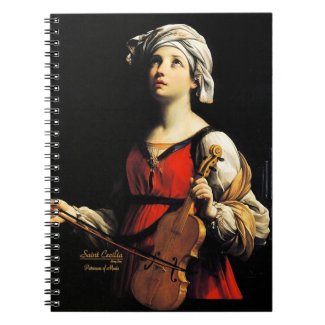
Saint of the Day: The Feast of the Assumption
Feast Day: August 15
Died: 55 AD at age 69
Patron Saint of : universal, heavenly mother of all
 In his August 15, 2004, homily given at Lourdes, Pope John Paul II quoted John 14:3 as one of the scriptural bases for understanding the dogma of the Assumption of Mary. In this verse, Jesus tells his disciples at the Last Supper, "If I go and prepare a place for you, I will come again, and will receive you to myself; that where I am, you may be there also." According to Catholic theology, Mary is the pledge of the fulfillment of Christ's promise. The feast of the Assumption on August 15 is a public holiday in many countries, including Austria, Belgium, Bulgaria, Chile, Colombia, Ecuador, France, Germany (Saarland and Bavaria only), Greece, Lebanon, Lithuania, Italy, Malta, Mauritius, Poland, Portugal, Senegal, Slovenia, and Spain. In Eastern Orthodox churches following the Julian Calendar, the feast day of Assumption of Mary falls on August 28. History of the beliefAlthough the Assumption (Latin: assūmptiō, "taken up") was only relatively recently defined as infallible dogma by the Catholic Church, and in spite of a statement by Saint Epiphanius of Salamis in AD 377 that no one knew whether Mary had died or not, apocryphal accounts of the assumption of Mary into heaven have circulated since at least the 4th century. The Catholic Church itself interprets chapter 12 of the Book of Revelation as referring to it. The earliest known narrative is the so-called Liber Requiei Mariae (The Book of Mary's Repose), which survives intact only in an Ethiopic translation. Probably composed by the 4th century, this Christian apocryphal narrative may be as early as the 3rd century. Also quite early are the very different traditions of the "Six Books" Dormition narratives. The earliest versions of this apocryphon are preserved by several Syriac manuscripts of the 5th and 6th centuries, although the text itself probably belongs to the 4th century.An Armenian letter attributed to Dionysus the Areopagite also mentions the event, although this is a much later work, written sometime after the 6th century. John of Damascus, from this period, is the first church authority to advocate the doctrine under his own name. His contemporaries, Gregory of Tours and Modestus of Jerusalem, helped promote the concept to the wider church. In some versions of the story the event is said to have taken place in Ephesus, in the House of the Virgin Mary, although this is a much more recent and localized tradition. The earliest traditions all locate the end of Mary's life in Jerusalem (see "Mary's Tomb"). By the 7th century a variation emerged, according to which one of the apostles, often identified as St Thomas, was not present at the death of Mary, but his late arrival precipitates a reopening of Mary's tomb, which is found to be empty except for her grave clothes. In a later tradition, Mary drops her girdle down to the apostle from heaven as testament to the event. This incident is depicted in many later paintings of the Assumption. Teaching of the Assumption of Mary became widespread across the Christian world, having been celebrated as early as the 5th century and having been established in the East by Emperor Maurice around AD 600. It was celebrated in the West under Pope Sergius I in the 8th century and Pope Leo IV then confirmed the feast as official. Theological debate about the Assumption continued, following the Reformation, climaxing in 1950 when Pope Pius XII defined it as dogma for the Catholic Church. Catholic theologian Ludwig Ott stated, "The idea of the bodily assumption of Mary is first expressed in certain transitus-narratives of the fifth and sixth centuries.... The first Church author to speak of the bodily assumption of Mary, in association with an apocryphal transitus B.M.V., is St. Gregory of Tours." The Catholic writer Eamon Duffy states that "there is, clearly, no historical evidence whatever for it." However, the Catholic Church has never asserted nor denied that its teaching is based on the apocryphal accounts. The Church documents are silent on this matter and instead rely upon other sources and arguments as the basis for the doctrine. Catholic teaching |
|---|
| In this dogmatic statement,
the phrase "having completed the course of her earthly life," leaves
open the question of whether the Virgin Mary died before her assumption
or whether she was assumed before death; both possibilities are allowed.
Mary's assumption is said to have been a divine gift to her as the
'Mother of God'. Ludwig Ott's view is that, as Mary completed her life
as a shining example to the human race, the perspective of the gift of
assumption is offered to the whole human race. In Ludwig Ott's Fundamentals of Catholic Dogma he states that "the fact of her death is almost generally accepted by the Fathers and Theologians, and is expressly affirmed in the Liturgy of the Church", to which he adduces a number of helpful citations, and concludes that "for Mary, death, in consequence of her freedom from original sin and from personal sin, was not a consequence of punishment of sin. However, it seems fitting that Mary's body, which was by nature mortal, should be, in conformity with that of her Divine Son, subject to the general law of death". The point of her bodily death has not been infallibly defined, and many believe that she did not die at all, but was assumed directly into Heaven. The dogmatic definition within the Apostolic Constitution Munificentissimus Deus which, according to Roman Catholic dogma, infallibly proclaims the doctrine of the Assumption leaves open the question whether, in connection with her departure, Mary underwent bodily death; that is, it does not dogmatically define the point one way or the other, as shown by the words "having completed the course of her earthly life". On November 1, 1950, Pope Pius XII solemnly declared:
Assumption and Dormition (Eastern Christianity) comparedThe Catholic Feast of the Assumption is celebrated on August 15, and the Eastern Orthodox and Eastern Catholics celebrate the Dormition of the Theotokos (the falling asleep of the Mother of God) on the same date, preceded by a 14-day fast period. Eastern Orthodox Christians believe that Mary died a natural death, that her soul was received by Christ upon death, and that her body was resurrected on the third day after her death and that she was taken up into heaven bodily in anticipation of the general resurrection. Her tomb was found empty on the third day. "...Orthodox tradition is clear and unwavering in regard to the central point [of the Dormition]: the Holy Virgin underwent, as did her Son, a physical death, but her body – like His – was afterwards raised from the dead and she was taken up into heaven, in her body as well as in her soul. She has passed beyond death and judgement, and lives wholly in the Age to Come. The Resurrection of the Body ... has in her case been anticipated and is already an accomplished fact. That does not mean, however, that she is dissociated from the rest of humanity and placed in a wholly different category: for we all hope to share one day in that same glory of the Resurrection of the Body which she enjoys even now."Many Catholics also believe that Mary first died before being assumed, but they add that she was miraculously resurrected before being assumed, while others believe she was assumed bodily into Heaven without first passing through death. As mentioned earlier, this aspect of the Assumption is not authoritatively defined in Catholic theology, and either understanding may be legitimately held by Catholics. Eastern Catholics observe the Feast as the Dormition. Many theologians note by way of comparison that in the Catholic Church, the Assumption is dogmatically defined, while in the Eastern Orthodox tradition, the Dormition is less dogmatically than liturgically and mystically defined. Such differences spring from a larger pattern in the two traditions, wherein Catholic teachings are often dogmatically and authoritatively defined – in part because of the more centralized structure of the Catholic Church– while in Eastern Orthodoxy, many doctrines are less authoritative. Mary's Heavenly BirthdayThe Assumption is important to many Catholic and Orthodox Christians as the Virgin Mary's heavenly birthday (the day that Mary was received into Heaven). Her acceptance into the glory of Heaven is seen by them as the symbol of the promise made by Jesus to all enduring Christians that they too will be received into paradise. The Assumption of Mary is symbolised in the Fleur-de-lys Madonna.The present Italian name of the holiday, "Ferragosto", may derive from the Latin name, Feriae Augusti ("Holidays of the Emperor Augustus"), since the month of August took its name from the emperor. The Solemnity of the Assumption on August 15 was celebrated in the eastern Church from the 6th Century. The Catholic Church adopted this date as a Holy Day of Obligation to commemorate the Assumption of the Blessed Virgin Mary, the real physical elevation of her sinless soul and incorrupt body into Heaven. The Solemnity of the Assumption on August 15 is a public holiday in many countries, including Andorra, Austria, Belgium, Burundi, Cameroon, Central African Republic, Chile, Cyprus, Republic of Congo, Côte d'Ivoire, Croatia, Colombia, Cyprus, East Timor, France, Gabon, Greece, Republic of Guinea, Haiti, Italy, Lebanon, Lithuania, Luxembourg, Republic of Macedonia, Madagascar, Malta, Mauritius, Republic of Moldova, Monaco, Paraguay, Poland, Portugal, Romania, Rwanda, Senegal, Seychelles, Slovenia, Spain, Switzerland, Tahiti, Togo, and Vanuatu. It is also a holiday in some predominantly Catholic states of Germany, including Bavaria and Saarland. In Guatemala it is observed in Guatemala City and in the town of Santa Maria Nebaj, both of which claim her as their patron saint. Also, this day is combined with Mother's Day in Costa Rica. In many places, religious parades and popular festivals are held to celebrate this day. Prominent Catholic and Orthodox countries in which Assumption day is an important festival but is not recognized by the state as a public holiday include Argentina, Brazil, Czech Republic, Ireland, Mexico, the Philippines and Russia. In Canada, Assumption Day is the Fête Nationale of the Acadians, of whom she is the patron saint. Businesses close on that day in heavily francophone parts of New Brunswick, Canada. The Virgin Assumed in Heaven is also patroness of the Maltese Islands and her feast, celebrated on 15 August, apart from being a public holiday in Malta is also celebrated with great solemnity in all the local churches especially in the seven localities known as the Seba' Santa Marijiet. In Anglicanism and Lutheranism, the feast is kept, but without official use of the word "Assumption". Scriptural SourcesAs mentioned, recent papal scholarship has cited John 14:3 as evidence of the Assumption in principle if not formally. Near the end of a review of the doctrine's history – a review which serves as the bulk of Munificentissimus Deus – Pope Pius XII tells us: "All these proofs and considerations of the holy Fathers and the theologians are based upon the Sacred Writings as their ultimate foundation." Precedent to this, he cites many passages that have been offered in support of this teaching:29. ...the holy writers...employed statements and various images and analogies of Sacred Scripture to Illustrate and to confirm the doctrine of the Assumption, which was piously believed... On the feast day of the Assumption, while explaining the prophet's words: "I will glorify the place of my feet," [Isaiah 60:13] he [i.e. St. Anthony of Padua] stated it as certain that the divine Redeemer had bedecked with supreme glory his most beloved Mother from whom he had received human flesh. He asserts that "you have here a clear statement that the Blessed Virgin has been assumed in her body, where was the place of the Lord's feet..." 30. ...St. Albert the Great... in a sermon which he delivered on the sacred day of the Blessed Virgin Mary's annunciation, explained the words "Hail, full of grace" [Luke 1:28]-words used by the angel who addressed her-the Universal Doctor, comparing the Blessed Virgin with Eve, stated clearly and incisively that she was exempted from the fourfold curse that had been laid upon Eve [cf. Genesis 3:16]... 32. Along with many others, the Seraphic Doctor held the same views. He considered it as entirely certain that...God...would never have permitted her body to have been resolved into dust and ashes. Explaining these words of Sacred Scripture: "Who is this that comes up from the desert, flowing with delights, leaning upon her beloved?" [Song of Songs 8:5] and applying them in a kind of accommodated sense to the Blessed Virgin, he reasons thus: "From this we can see that she is there bodily...her blessedness would not have been complete unless she were there as a person. The soul is not a person, but the soul, joined to the body, is a person. It is manifest that she is there in soul and in body. Otherwise she would not possess her complete beatitude. The Pope also cites, significantly in paragraph 39, 1st Corinthians 15, where we read (vv. 21–26): For by a man came death, and by a man the resurrection of the dead. And as in Adam all die, so also in Christ all shall be made alive. But every one in his own order: the firstfruits Christ, then they that are of Christ, who have believed in his coming. Afterwards the end, when he shall have delivered up the kingdom to God and the Father, when he shall have brought to nought all principality, and power, and virtue. For he must reign, until he hath put all his enemies under his feet. And the enemy death shall be destroyed last: For he hath put all things under his feet. In this passage Paul alludes to Genesis 3:15 (in addition to the primary reference of Psalms 8:6), where it is prophesied that the seed of the woman will crush Satan with his feet. Since, then, Jesus arose to Heaven to fulfill this prophecy, it follows that the woman would have a similar end, since she shared this enmity with Satan. The pope comments thus in paragraph 39: ...although subject to [Jesus, who is] the new Adam, [Mary, the new Eve] is most intimately associated with him in that struggle against the infernal foe which, as foretold in the protoevangelium [i.e. Genesis 3:15], would finally result in that most complete victory over the sin and death which are always mentioned together in the writings of the Apostle of the Gentiles. Consequently, just as the glorious resurrection of Jesus was an essential part and the final sign of this victory, so that struggle which was common to the Blessed Virgin and her divine Son should be brought to a close by the glorification of her virginal body, for the same Apostle says: "When this mortal thing hath put on immortality, then shall come to pass the saying that is written: Death is swallowed up in victory." The pope also mentions (in paragraph 26) Psalms 132, a liturgical psalm commemorating the return of the Ark of God to Jerusalem and lamenting its subsequent loss. The second half of the psalm says that the loss will be recompensed in the New Covenant, and so it is hopefully prayed, "Arise, O Lord, into thy resting place: thou and the ark, which thou hast sanctified" (v. 8). Since the Church sees this New Covenant ark in Mary, it understands that she was taken into Heaven in the same manner as the Lord – that is, body and soul. In the same paragraph, the pope mentions also Psalms 45:9–17 for support of a heavenly Queen present bodily with the heavenly King Jesus, and Song of Songs 3:6, 4:8, and 6:9, which speaks of David's lover "that goeth up by the desert, as a pillar of smoke of aromatical spices, of myrrh, and frankincense, and of all the powders of the perfumer". Regarding the Marian interpretations of those passages from Psalms 132 to Song of Songs 6:9 and those in between, the pope did, however, consider them "rather free in their use of events and expressions taken from Sacred Scripture" (paragraph 26). Finally, he mentions in the next paragraph "that woman clothed with the sun [Revelation 12:1–2] whom John the Apostle contemplated on the Island of Patmos" as support for the doctrine. The text seems to parallel this woman with the woman of the Genesis 3 prophecy (and hence Mary): for in verse 9 the passage recalls "that old serpent" of Genesis 3, and reflects the prophecy that God would place "enmities between thee [i.e. Satan] and the woman, and thy seed and her seed" when it says that Satan "was angry against the woman: and went to make war with the rest of her seed" (Rev. 12:17). All these passages – viz., John 14:3, Isaiah 60:13, Luke 1:28, Song of Songs 8:5, 1st Corinthians 15:21–26, Psalms 132:8, Psalms 45:9–17, Song of Songs 3:6, 4:8, 6:9, Genesis 3:15, and Revelation 12:1–2 – are drawn upon as Scriptural support of the Assumption both in that original document, and today by Catholic apologists |
|---|
References:
- Duggan, Paul E. (1989). The Assumption Dogma: Some Reactions and Ecumenical Implications in the Thought of English-speaking Theologians. Emerson Press, Cleveland, Ohio
- Shoemaker, Stephen J. (2002, 2006). Ancient Traditions of the Virgin Mary's Dormition and Assumption. Oxford University Press, Oxford. ISBN 0-19-925075-8 (Hardcover 2004, Reprint), ISBN 0-19-921074-8 (Paperback 2006)
●▬▬ஜ۩۞۩ஜ▬♥▬●▬ஜ۩۞۩ஜ▬♥▬●▬ஜ۩۞۩ஜ▬▬●
Featured Item from Litany Lane

Today's Snippet I: Blessed Bartolo Longo

Early years
Conversion
Shrine of Our Lady of Pompeii

Later life and death
Beatification
References
- Rum, A., "Our Lady of Pompei", Dictionary of Mary, Catholic Book Publishing Co., NY, 1985
- Brown, Ann M., "Apostle of the Rosary: Blessed Bartolo Longo", New Hope Publications. 2004. ISBN 1-892875-24-1
- Giuseppe Guerzoni, Garibaldi: con documenti editi e inediti, Florence, 1882, Vol. 11, 485.
- Conan, Doyle, "The History of Spiritualism Vol II", The Book Tree Co., CA, 2007
- Sullivan, OP, Br. Ezra, "The Rosary: the Devil's Defeat", Catholic Exchange, October 26, 2007 Angelo Stagnaro, "Blessed Bartolo Longo: The Ex-Satanist On the Path to Sainthood", Catholic Herald, 2011-07-19
●▬▬ஜ۩۞۩ஜ▬♥▬●▬ஜ۩۞۩ஜ▬♥▬●▬ஜ۩۞۩ஜ▬▬●
Today's Snippet II: Pontifical Shrine of the Blessed Virgin of the Rosary of Pompeii

History
Architecture
Our Lady of the Rosary

References
- Cruz, Joan Carroll (1984). Relics. Huntington, Ind.: Our Sunday Visitor. ISBN 978-0-87973-701-6. Retrieved 8 August 2016.
- Carillo, Saverio; Sepe, Vincenzo; Petillo, Pasquale (2010). "The Huge Enlargement with R.C. Structure of the Shrine of Pompeii in Italy (1933-1939): a Technological, Architectonic and Cultural Challenge" (PDF). IABSE Symposium, Large Structures and Infrastructures for Environmentally Constrained and Urbanised Areas (Conference paper). Venice: 802–809. Retrieved 8 August 2016.
Today's Snippet III: History of the 54 Day Rosary Novena
if you really wish to obtain your request. Should you not obtain the favor you seek, be assured that the Rosary Queen, who knows what each one stands most in need of, has heard your prayer. You will not have prayed in vain. No prayer ever went unheard. And Our Blessed Lady has never been known to fail.
Reference:
- Knights of Divine Mercy. Retreived August, 8, 2016 from http://knightsofdivinemercy.com/wp-content/uploads/2011/04/54_Day_Novena_Rosary.pdf
Today's Snippet IV: The 54 Day Novena
Start: Monday August 15, 2016 - Feast of the Assumption
Finish: Friday, October 7, 2016 - the Feast of our Lady of the Rosary
Intentions: Worldwide Conversion, Our Nation, and World Peace
How to Recite the 54-Day Rosary Novena
Opening prayer s for Joyful Mysteries
In thanksgiving:
Hail, Queen of the Most Holy Rosary, my Mother Mary, hail! At thy feet I gratefully kneel to offer thee a Crown of Roses snow white buds to remind thee of thy joys each bud recalling to thee a holy mystery; each ten bound together with my petition for a particular grace. O Holy Queen, Dispenser of God's graces. and Mother of all who invoke thee! thou canst not look upon my gift and fail to see its binding. As thou receivest my gift, so wilt thou receive my thanksgiving; from thy bounty thou hast given me the favor I so earnestly and trustingly sought. I despaired not of what I asked of thee, and thou hast truly shown thyself my Mother.
Opening Prayers for Sorrowful Mysteries
In petition:Hail, Queen of the Most Holy Rosary, my Mother Mary, hail! At thy feet I humbly kneel to offer thee a Crown of Roses blood red roses to remind thee of the passion of thy divine Son, with Whom thou didst so fully partake of its bitterness each rose recalling to thee a holy mystery; each ten bound together with my petition for a particular grace. O Holy Queen, dispenser of God's graces, and Mother of all who invoke thee! Thou canst not look upon my gift and fail to see its binding. As thou receivest my gift, so wilt thou receive my petition; from thy bounty thou wilt give me the favor I so earnestly and trustingly seek. I despair of nothing that I ask of thee. Show thyself my Mother!
Hail, Queen of the Most Holy Rosary, my Mother Mary, hail! At thy feet I gratefully kneel to offer thee a Crown of Roses blood red roses to remind thee of the passion of thy divine Son, with Whom thou didst so fully partake of its bitterness each rose recalling to thee a holy mystery; each ten bound together with my petition for a particular grace. O Holy Queen, dispenser of God's graces, and Mother of all who invoke thee! Thou canst not look upon my gift and fail to see its binding. As thou receivest my gift, so wilt thou receive my thanksgiving; from thy bounty thou hast given me the favor I so earnestly and trustingly sought. I despaired not of what I asked of thee, and thou hast truly shown thyself my Mother.
Opening Prayers for Glorious Mysteries
In petition:Indulgencies
Featured Item from Litany Lane

by LitanyLane
FEATURED BOOK
THE MYSTICAL CITY OF GOD
Book 8, Chapter 5
SAINT
GABRIEL BRINGS NOTICE OF DEATH
In thy kingly presence I declare and say, that my last will is this: Of the goods of mortal life and of the world in which I live, I possess none that I can leave; for never have I possessed or loved anything beside Thee, who art my good and all my possession. To the heavens, the stars and planets, to the elements and all creatures in them I give thanks, because according to thy will they have sustained me without my merit, and lovingly I desire and ask them to serve and praise Thee in the offices and ministries assigned to them, and that they continue to sustain and benefit my brethren and fellowmen. In order that they may do it so much the better, I renounce and assign to mankind the possession, and as far as possible, the dominion of them, which thy Majesty has given me over these irrational creatures, so that they may now serve and sustain my fellowmen.
Two tunics and a cloak, which served to cover me, I leave to John for his disposal, since I hold him as a son. My body I ask the earth to receive again for thy service, since it is the common mother and serves Thee as thy creature; my soul, despoiled of its body and of all visible things, O my God, I resign into thy hands, in order that it may love and magnify Thee through all thy eternities.
My merits and all the treasures, which with thy grace through my works and exertions I have acquired, I leave to the holy Church, my mother and my mistress, as my residuary heiress, and with thy permission I there deposit them, wishing them to be much greater. And I desire before all else they redound to the exaltation of thy holy name and procure the fulfillment of thy will earth as it is done in heaven, and that all the nations come to the knowledge, love and veneration of Thee, the true God.”
In the third place I offer them for the spiritual good of my devoted servants, who invoke and call upon me, in order that they may receive thy protection and grace, and afterwards eternal life.
In the fourth place I desire that my services and labors may move Thee to mercy toward all the sinning children of Adam, in order that they may withdraw from their sinful state. From this hour on I propose and desire to continue my prayers for them in thy divine presence, as long as the world shall last. This, Lord and my God, is my last will, always subject to thy own.” At the conclusion of this testament of the Queen, the most blessed Trinity approved and confirmed it; and Christ the Redeemer, as if authorizing it all, witnessed it by writing in the heart of his Mother these words: “Let it be done as thou wishest and ordainest.”
WORDS OF THE QUEEN
The Virgin Mary
speaks to Sister Mary of Agreda, Spain
Book 8, Chapter 6
THE
GLORIOUS TRANSITION OF THE VIRGIN MARY
During this quietness the incarnate Word descended from heaven on a throne of ineffable glory, accompanied by all the saints and innumerable angels, and the house of the Cenacle was filled with glory. The most blessed Mary adored the Lord and kissed his feet. Prostrate before Him She made the last and most profound act faith and humility in her mortal life. On this occasion the most pure Creature, the Queen of the heavens, shrank within Herself and lowered Herself to the earth more profoundly than all men together ever have or ever will humiliate themselves for all their sins. Her divine Son gave Her His blessing and in the presence of the courtiers of heaven spoke to Her these words: “My dearest Mother, whom I have chosen for my dwelling–place, the hour is come in which thou art to pass from the life of this death and of the world into the glory of my Father and Mine, where thou shalt possess the throne prepared for thee at my right hand and enjoy it through all eternity. And since, by my power and as my Mother have caused thee to enter the world free and exempt from sin, therefore also death shall have no right or permission to touch thee at thy exit from this world. If thou wishest not to pass through it come with Me now to partake of my glory, which thou hast merited.”
The Apostles and disciples, amid the tears and the joy of the wonders they had seen, were absorbed in admiration for some time, and then sang many hymns and psalms in honor of the most blessed Mary now departed. This glorious Transition of the great Queen took place in the hour in which her divine Son had died, at three o’clock on a Friday, the thirteenth day of August, she being seventy years of age, less the twenty–six days intervening between the thirteenth day of August, on which She died, and the eighth of September, the day of her birth. The heavenly Mother had survived the death of Christ the Savior twenty–one years, four months and nineteen days; and his virginal birth, fifty–five years. This reckoning can be easily made in the following manner: when Christ our Savior was born, his virginal Mother was fifteen years, three months and seventeen days of age. The Lord lived thirty–three years and three months; so that at the time of his sacred Passion the most blessed Lady was forty–eight years, six months and seventeen days old; adding to these another twenty–one years, four months and nineteen days, we ascertain her age as seventy years, less twenty–five or twenty–six days. *(Age at death, 69 years, 11 months, 5 or 6 days.)
WORDS OF THE QUEEN
The Virgin Mary
speaks to Sister Mary of Agreda, Spain
Book 8, Chapter 7
BURIAL
AND ASSUMPTION OF THE VIRGIN
The Apostles took upon their shoulders the sacred body and the tabernacle of God and, as priests of the evangelical law, bore the Propitiatory of the divine oracles and blessings in orderly procession from the Cenacle in the city to the valley of Josaphat. This was the visible accompaniment of the dwellers of Jerusalem.
The Apostles in carrying the sacred body felt wonderful effects of divine light and consolation, which the disciples shared according to their measure. All the multitudes of the people were seized with astonishment at the fragrance diffused about, the sweet music and the other prodigies. They proclaimed God great and powerful in this Creature and in testimony of their acknowledgment, they struck their breasts in sorrow and compunction.
For the same reason, instead of being judged with the rest, She shall be seated at the right hand of the Judge to judge with Him all the creatures. If in the first instant of her Conception She was the brightest Aurora, effulgent with the rays of the sun of the Divinity beyond all the brightness of the most exalted seraphim, and if afterwards She was still further illumined by the contact of the hypostatic Word, who derived his humanity from her purest substance, it necessarily follows that She should be His Companion for all eternity, possessing such a likeness to Him, that none greater can be possible between a Godman and a creature.
In this light the Redeemer himself presented Her before the throne of the Divinity; and speaking to the eternal Father in the presence of all the blessed, who were ravished at this wonder, the most sacred humanity uttered these words: “Eternal Father, my most beloved Mother, thy beloved Daughter and the cherished Spouse of the Holy Ghost, now comes to take possession of the crown and glory, which We have prepared as a reward for her merit. She is the one who was born as the rose among thorns, untouched, pure and beautiful, worthy of being embraced by Us and being placed upon a throne to which none of our creatures can ever attain, and to which those conceived in sin cannot aspire. This is our chosen and our only One, distinguished above all else, to whom We communicated our grace and our perfections beyond the measure accorded to other creatures; in whom We have deposited the treasure of our incomprehensible Divinity and its gifts; who most faithfully preserved and made fruitful the talents, which We gave Her; who never swerved from our will, and who found grace and pleasure in our eyes. My Father, most equitous is the tribunal of our justice and mercy, and in it the services of our friends are repaid in the most superabundant manner. It is right that to my Mother be given the reward of a Mother; and if during her whole life and in all her works She was as like to Me as is possible for a creature to be, let Her also be as like to Me in glory and on the throne of our Majesty; so that where holiness is in essence, there it may also be found in its highest participation.’’
WORDS OF THE QUEEN
The Virgin Mary
speaks to Sister Mary of Agreda, Spain
Featured Item from Litany Lane

Catholic Catechism
PART THREE - THE LIFE OF THE CHRIST
SECTION ONE - MAN'S VOCATION LIFE IN THE SPIRIT
CHAPTER TWO - THE HUMAN COMMUNION
ARTICLE TWO - PARTICIPATION IN SOCIAL LIFE
1877 The vocation of humanity is to show forth the image of God and to be transformed into the image of the Father's only Son. This vocation takes a personal form since each of us is called to enter into the divine beatitude; it also concerns the human community as a whole.
ARTICLE 2 - PARTICIPATION IN SOCIAL LIFE
I. AUTHORITY
1897 "Human society can be neither well-ordered nor prosperous unless it has some people invested with legitimate authority to preserve its institutions and to devote themselves as far as is necessary to work and care for the good of all."15
By "authority" one means the quality by virtue of which persons or institutions make laws and give orders to men and expect obedience from them.
1898 Every human community needs an authority to govern it.16 The foundation of such authority lies in human nature. It is necessary for the unity of the state. Its role is to ensure as far as possible the common good of the society.
1899 The authority required by the moral order derives from God: "Let every person be subject to the governing authorities. For there is no authority except from God, and those that exist have been instituted by God. Therefore he who resists the authorities resists what God has appointed, and those who resist will incur judgment."17
1900 The duty of obedience requires all to give due honor to authority and to treat those who are charged to exercise it with respect, and, insofar as it is deserved, with gratitude and good-will.
- Pope St. Clement of Rome provides the Church's most ancient prayer for political authorities:18 "Grant to them, Lord, health, peace, concord, and stability, so that they may exercise without offense the sovereignty that you have given them. Master, heavenly King of the ages, you give glory, honor, and power over the things of earth to the sons of men. Direct, Lord, their counsel, following what is pleasing and acceptable in your sight, so that by exercising with devotion and in peace and gentleness the power that you have given to them, they may find favor with you."19
The diversity of political regimes is morally acceptable, provided they serve the legitimate good of the communities that adopt them. Regimes whose nature is contrary to the natural law, to the public order, and to the fundamental rights of persons cannot achieve the common good of the nations on which they have been imposed.
1902 Authority does not derive its moral legitimacy from itself. It must not behave in a despotic manner, but must act for the common good as a "moral force based on freedom and a sense of responsibility":21
- A human law has the character of law to the extent that it accords with right reason, and thus derives from the eternal law. Insofar as it falls short of right reason it is said to be an unjust law, and thus has not so much the nature of law as of a kind of violence.22
1904 "It is preferable that each power be balanced by other powers and by other spheres of responsibility which keep it within proper bounds. This is the principle of the 'rule of law,' in which the law is sovereign and not the arbitrary will of men."24
II. THE COMMON GOOD
1905 In keeping with the social nature of man, the good of each individual is necessarily related to the common good, which in turn can be defined only in reference to the human person:
- Do not live entirely isolated, having retreated into yourselves, as if you were already justified, but gather instead to seek the common good together.25
1907 First, the common good presupposes respect for the person as such. In the name of the common good, public authorities are bound to respect the fundamental and inalienable rights of the human person. Society should permit each of its members to fulfill his vocation. In particular, the common good resides in the conditions for the exercise of the natural freedoms indispensable for the development of the human vocation, such as "the right to act according to a sound norm of conscience and to safeguard . . . privacy, and rightful freedom also in matters of religion."27
1908 Second, the common good requires the social well-being and development of the group itself. Development is the epitome of all social duties. Certainly, it is the proper function of authority to arbitrate, in the name of the common good, between various particular interests; but it should make accessible to each what is needed to lead a truly human life: food, clothing, health, work, education and culture, suitable information, the right to establish a family, and so on.28
1909 Finally, the common good requires peace, that is, the stability and security of a just order. It presupposes that authority should ensure by morally acceptable means the security of society and its members. It is the basis of the right to legitimate personal and collective defense.
1910 Each human community possesses a common good which permits it to be recognized as such; it is in the political community that its most complete realization is found. It is the role of the state to defend and promote the common good of civil society, its citizens, and intermediate bodies.
1911 Human interdependence is increasing and gradually spreading throughout the world. The unity of the human family, embracing people who enjoy equal natural dignity, implies a universal common good. This good calls for an organization of the community of nations able to "provide for the different needs of men; this will involve the sphere of social life to which belong questions of food, hygiene, education, . . . and certain situations arising here and there, as for example . . . alleviating the miseries of refugees dispersed throughout the world, and assisting migrants and their families."29
1912 The common good is always oriented towards the progress of persons: "The order of things must be subordinate to the order of persons, and not the other way around."30 This order is founded on truth, built up in justice, and animated by love.
III. RESPONSIBILITY AND PARTICIPATION
1913 "Participation" is the voluntary and generous engagement of a person in social interchange. It is necessary that all participate, each according to his position and role, in promoting the common good. This obligation is inherent in the dignity of the human person.
1914 Participation is achieved first of all by taking charge of the areas for which one assumes personal responsibility: by the care taken for the education of his family, by conscientious work, and so forth, man participates in the good of others and of society.31
1915 As far as possible citizens should take an active part in public life. The manner of this participation may vary from one country or culture to another. "One must pay tribute to those nations whose systems permit the largest possible number of the citizens to take part in public life in a climate of genuine freedom."32
1916 As with any ethical obligation, the participation of all in realizing the common good calls for a continually renewed conversion of the social partners. Fraud and other subterfuges, by which some people evade the constraints of the law and the prescriptions of societal obligation, must be firmly condemned because they are incompatible with the requirements of justice. Much care should be taken to promote institutions that improve the conditions of human life.33
1917 It is incumbent on those who exercise authority to strengthen the values that inspire the confidence of the members of the group and encourage them to put themselves at the service of others. Participation begins with education and culture. "One is entitled to think that the future of humanity is in the hands of those who are capable of providing the generations to come with reasons for life and optimism."34
IN BRIEF
1918 "There is no authority except from God, and those authorities that exist have been instituted by God" (Rom 13:1).
1919 Every human community needs an authority in order to endure and develop.
1920 "The political community and public authority are based on human nature and therefore . . . belong to an order established by God" (GS 74 § 3).
1921 Authority is exercised legitimately if it is committed to the common good of society. To attain this it must employ morally acceptable means.
1922 The diversity of political regimes is legitimate, provided they contribute to the good of the community.
1923 Political authority must be exercised within the limits of the moral order and must guarantee the conditions for the exercise of freedom.
1924 The common good comprises "the sum total of social conditions which allow people, either as groups or as individuals, to reach their fulfillment more fully and more easily" (GS 26 1).
1925 The common good consists of three essential elements: respect for and promotion of the fundamental rights of the person; prosperity, or the development of the spiritual and temporal goods of society; the peace and security of the group and of its members.
1926 The dignity of the human person requires the pursuit of the common good. Everyone should be concerned to create and support institutions that improve the conditions of human life.
1927 It is the role of the state to defend and promote the common good of civil society. The common good of the whole human family calls for an organization of society on the international level.
15 John XXIII, PT 46.
16 Cf. Leo XIII, Immortale Dei; Diuturnum illud.
17 Rom 13:1-2; cf. 1 Pet 2:13-17.
18 Cf. as early as 1 Tim 2:1-2.
19 St. Clement of Rome, Ad Cor. 61:SCh 167,198-200.
20 GS 74 § 3.
21 GS 74 § 2.
22 St. Thomas Aquinas, STh I-II,93 3, ad 2.
23 John XXIII PT 51.
24 CA 44.
25 Ep. Barnabae, 4,10:PG 2,734.
26 GS 26 § 1; cf. GS 74 § 1.
27 GS 26 § 2.
28 Cf. GS 26 § 2.
29 GS 84 § 2.
30 GS 26 § 3.
31 Cf. CA 43.
32 GS 31 § 3.
33 Cf. GS 30 § 1.
34 GS 31 § 3.
Featured Item from Litany Lane

View more Inspirational Designs at Litany Lane.
